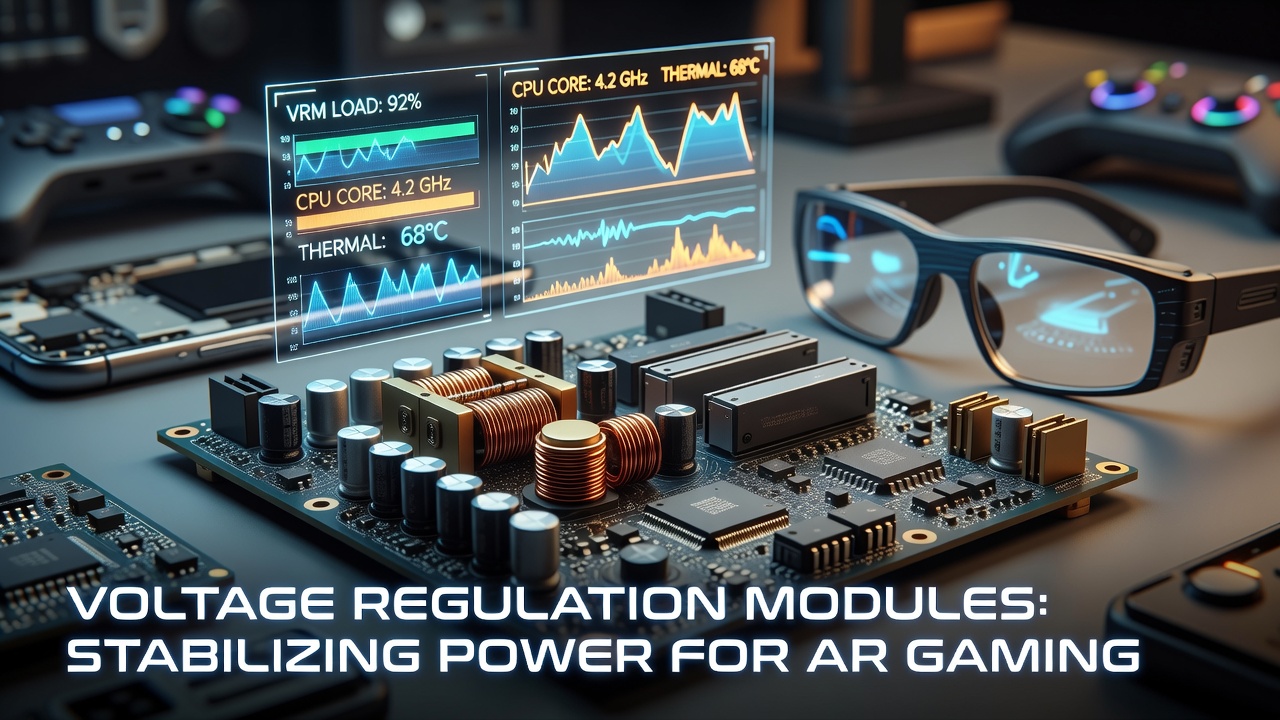
Voltage Regulation Modules Ensuring Reliable Power for Mobile AR Gaming Processors
Augmented reality gaming on mobile devices demands consistent power delivery to processors that manage real-time sensor fusion, high-resolution rendering, and spatial tracking simultaneously, and voltage regulation modules play a central role in maintaining that stability across varying loads. These modules convert and stabilize input voltages from batteries or chargers into precise levels required by CPUs, GPUs, and memory components, preventing fluctuations that could lead to performance drops or system resets during intense sessions. Research from the IEEE indicates that modern VRMs in flagship smartphones employ multi-phase buck converters paired with low-ESR capacitors to achieve response times under 10 microseconds, which supports uninterrupted frame delivery in AR titles that overlay interactive elements onto live camera feeds.
Core Mechanisms Behind Voltage Stability
Engineers design voltage regulation modules with feedback loops that monitor output in real time and adjust switching frequencies dynamically, while integrated inductors and MOSFET arrays handle current spikes without excessive heat buildup. Data from the European Commission’s Joint Research Centre shows that such designs reduce voltage droop by up to 40 percent compared with earlier linear regulators, allowing mobile processors to sustain peak frequencies longer during AR experiences that combine simultaneous localization and mapping with photorealistic graphics. Observers note that manufacturers increasingly incorporate digital pulse-width modulation controllers, which enable fine-grained voltage scaling based on workload predictions from on-chip sensors, and this approach proves especially useful when AR games trigger sudden bursts of compute activity tied to user movement or environmental changes.
Power Demands Unique to Augmented Reality Gaming
Mobile AR applications place sustained pressure on power subsystems because they require continuous camera input processing, inertial measurement unit data fusion, and wireless connectivity alongside graphics rendering, creating load profiles that differ markedly from traditional mobile gaming. Studies published by the National Institute of Standards and Technology highlight how voltage sags as small as 50 millivolts can trigger thermal throttling or frame drops in these scenarios, and VRMs counteract this by maintaining tight tolerance bands even when battery voltage declines over extended play periods. In August 2026 industry benchmarks revealed that devices equipped with advanced VRMs maintained 60 frames per second in demanding AR titles for 25 percent longer than models relying on basic regulation circuits, demonstrating measurable gains in session stability without external cooling attachments.
Integration with Mobile System Architectures
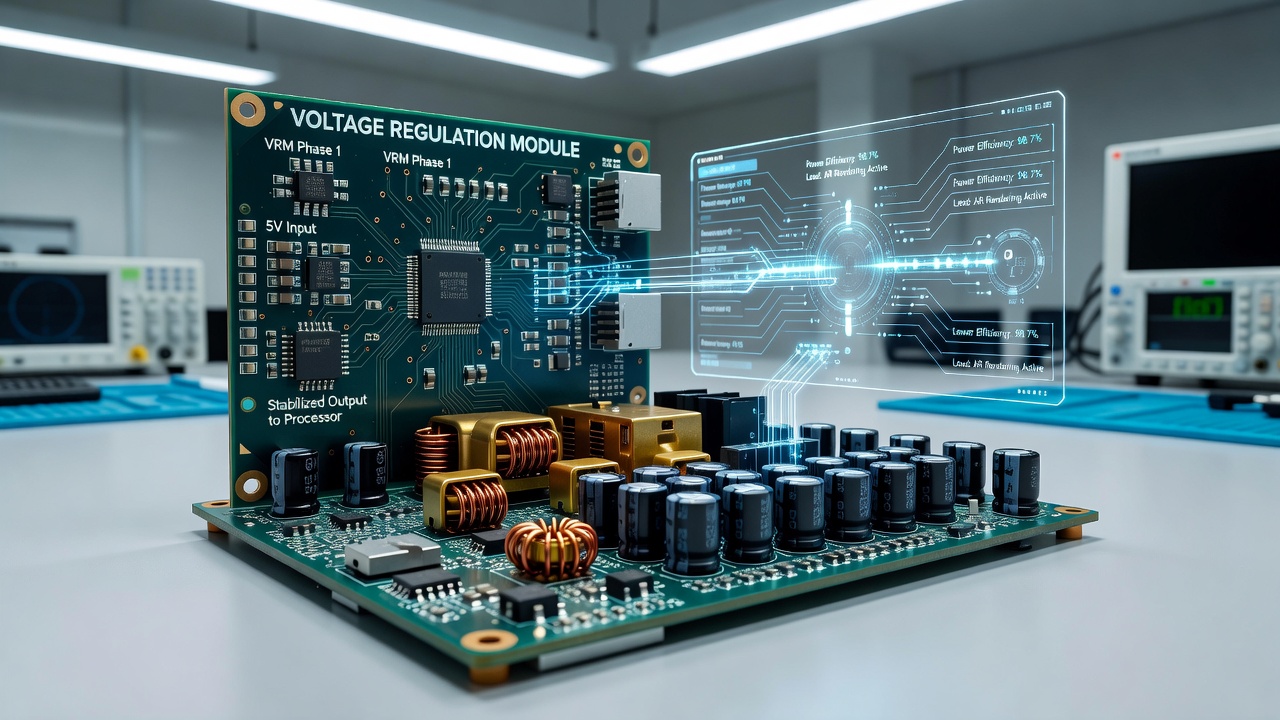
System-on-chip designers integrate voltage regulation modules directly onto the same package as mobile processors or position them on adjacent PCB layers to minimize trace inductance, and this physical proximity reduces parasitic losses that otherwise amplify during rapid current transients typical of AR workloads. According to findings from the Australian Centre for Advanced Computing, optimized VRM layouts have contributed to measurable reductions in power delivery network impedance, enabling processors to operate closer to their rated maximums without encountering brownout conditions. Engineers also pair these modules with adaptive voltage positioning techniques that lower nominal voltages during lighter phases of gameplay and raise them instantly when tracking algorithms detect complex scenes, preserving battery life while safeguarding performance consistency.
Performance Outcomes in Real-World Deployments
Field data collected from tournament environments and consumer testing labs shows that voltage regulation modules help eliminate micro-stutters caused by power instability, which in turn supports smoother tracking of virtual objects anchored to physical surfaces. Research teams at the University of Tokyo documented cases where improved VRM response correlated with higher sustained polygon throughput in AR strategy games, and similar patterns appear across multiple device generations released since 2024. Those who analyze telemetry logs from AR titles frequently observe that devices with refined regulation hardware exhibit fewer thermal limit interventions, allowing players to maintain higher graphical settings across longer sessions without external intervention.
Conclusion
Voltage regulation modules continue to serve as foundational components that translate battery power into reliable, high-performance operation for mobile processors engaged in demanding augmented reality gaming, with ongoing refinements in digital control and component integration driving incremental gains in stability and efficiency. Data from multiple research institutions confirms their direct contribution to consistent frame delivery and reduced throttling, positioning them as essential elements in the evolving landscape of portable AR hardware.