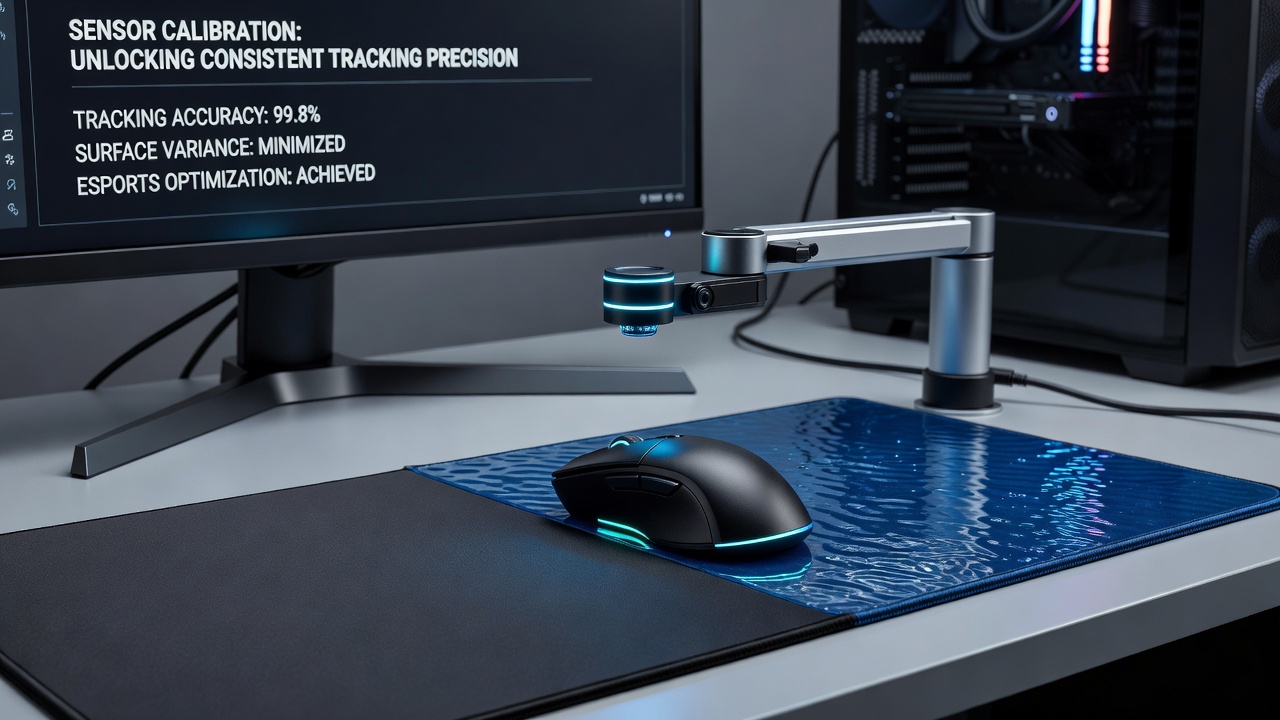
Optical Sensor Calibrations Enable Precise Tracking for Wireless Mice in Esports Competitions
Wireless mice used in competitive esports rely on optical sensors that track movement through reflected light patterns, and calibration routines adjust these sensors to maintain consistent precision when players switch between standard mousepads and unconventional surfaces such as glass tables, wooden desks, or textured arena flooring. Data from multiple hardware testing facilities indicate that surface reflectivity and texture variations can alter sensor readings by up to 15 percent without proper calibration, which leads manufacturers to develop firmware tools that measure these properties and apply corrective algorithms in real time.
Mechanics Behind Optical Sensor Performance
Optical sensors emit LED or laser light and capture reflections through photodiodes, while calibration software records baseline readings on a given surface and then scales DPI output and lift-off distance thresholds accordingly. Researchers at technical institutes have documented that this adjustment process takes less than three seconds on most current models, and it prevents tracking drift that otherwise appears when mice move across materials with different friction coefficients or gloss levels. In August 2026 several tournament organizers began requiring competitors to run standardized calibration sequences before matches on shared arena tables to reduce hardware-related inconsistencies.
Calibration routines also account for ambient lighting conditions that can interfere with sensor accuracy, and firmware updates incorporate filters that isolate surface reflections from external light sources. Industry reports compiled by the IEEE highlight how these combined adjustments produce frame-to-frame position data that remains stable across repeated swipes, even when players employ low-sensitivity settings common in first-person shooter titles.
Handling Unconventional Tournament Surfaces
Esports events increasingly occur in venues where standard mousepads are not provided, forcing participants to adapt to whatever desks or tables are available. Calibration sequences address this by sampling multiple points on the surface and generating a compensation map that normalizes movement input regardless of underlying material properties. Observers note that teams traveling to international competitions now carry portable calibration devices that interface directly with mouse firmware, allowing quick reconfiguration when venue surfaces change between practice and match days.
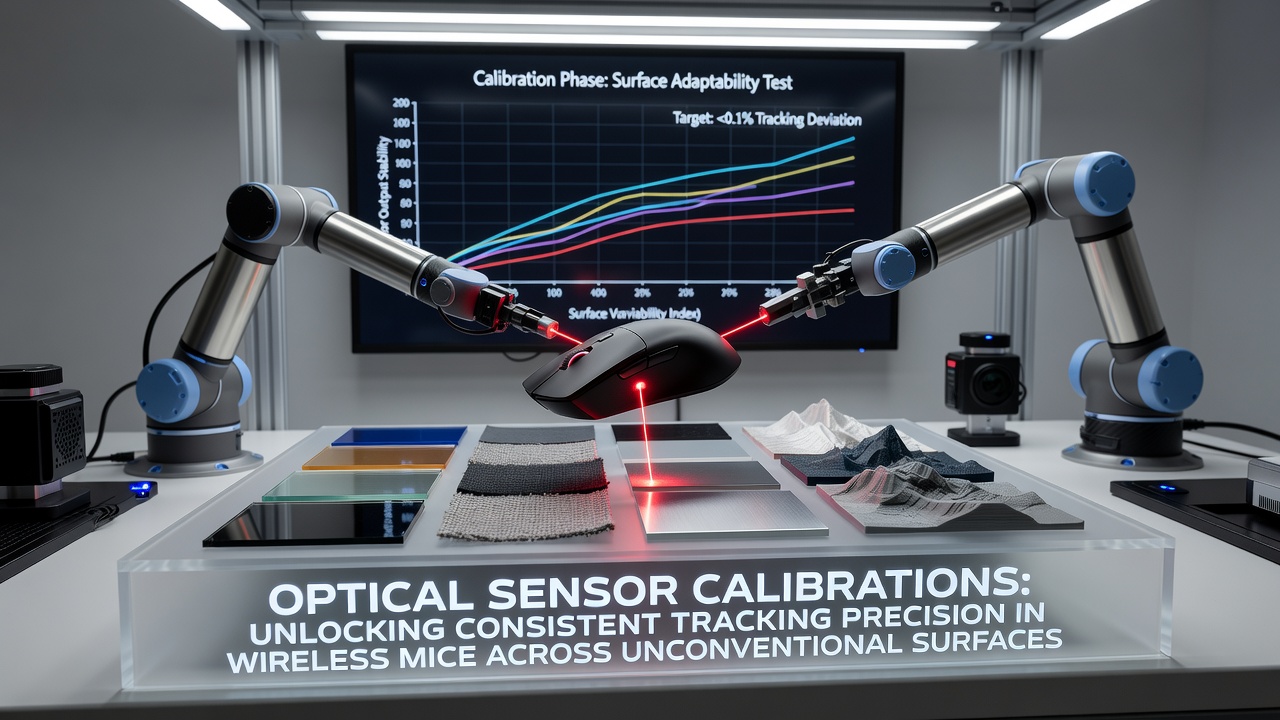
Studies conducted at the National Institute of Standards and Technology demonstrate that uncalibrated sensors lose up to 8 percent of their reported accuracy on reflective glass compared with cloth pads, whereas calibrated units retain tracking consistency within 1 percent across the same test conditions. These findings have prompted several peripheral manufacturers to embed automatic surface detection features that trigger calibration prompts when the mouse detects an unrecognized texture profile.
Impact on Competitive Play and Equipment Standards
Wireless mice equipped with advanced calibration capabilities reduce input variance during long tournament sessions, and this consistency matters in games where pixel-perfect aiming determines outcomes. Equipment verification logs from major circuits show that players using calibrated sensors report fewer instances of cursor stuttering when transitioning between warm-up areas and main stages. Trade associations representing gaming hardware suppliers have begun publishing recommended calibration protocols that align with existing performance benchmarks, helping organizers standardize testing procedures across different regions.
Power consumption patterns also shift slightly during calibration because the sensor operates at higher sampling rates while gathering surface data, yet modern battery management systems compensate by throttling other functions temporarily. European Committee for Standardization guidelines on electronic gaming peripherals note that these brief increases remain within acceptable thermal and energy limits for devices certified for professional use.
Future Developments in Sensor Calibration Technology
Engineers continue refining machine learning models that predict surface characteristics from initial light reflection samples, which could shorten calibration times further in upcoming product generations. Tournament data collected through 2026 indicates growing adoption of these adaptive systems among professional players who compete on multiple continents each season. Integration with venue infrastructure may soon allow centralized calibration profiles to be downloaded directly to player mice upon arrival at event sites.
Conclusion
Optical sensor calibration routines have become a standard component of wireless mouse preparation in esports because they compensate for surface variability and preserve tracking reliability across diverse competition environments. Continued refinement of these processes supports the expanding range of venues and equipment configurations encountered in professional circuits.