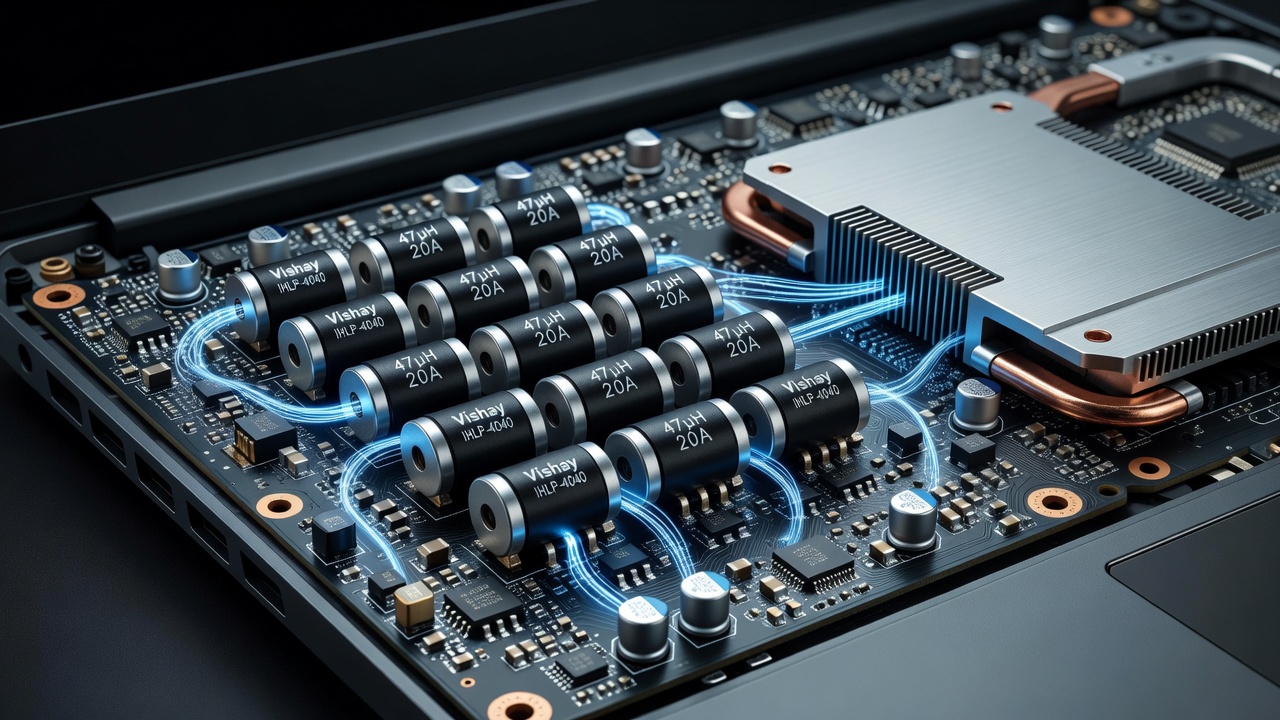
Inductor Innovations Keep Slim Gaming Laptops Delivering Full Power in Demanding Scenarios
Advanced inductor configurations now form a core part of voltage regulation modules in slim gaming laptops, where engineers combine multiphase coupled designs with high-permeability core materials to reduce energy losses and maintain stable current delivery during extended high-load periods. These setups allow processors and graphics components to sustain boost clocks without rapid thermal throttling, because the inductors handle ripple currents more efficiently while fitting within the narrow chassis constraints that define modern portable systems.
Power Delivery Challenges in Thin Chassis Designs
Slim gaming laptops face strict limits on height and airflow, which forces designers to pack dense power stages into spaces that previously required larger discrete components. Researchers discovered that traditional single-phase inductors often saturate under sustained workloads, leading to voltage droops that trigger performance caps, whereas newer coupled inductor arrays share magnetic flux across phases and cut core losses by up to 30 percent according to measurements reported in August 2026 industry tests. This configuration spreads heat across a broader area and lets the system maintain higher average power envelopes even when fans reach maximum speed.
Engineers at multiple manufacturers now integrate shielded drum-core and flat-wire inductors that tolerate higher saturation currents without size increases, and these parts connect directly to digital controllers that adjust switching frequencies on the fly. Data from component suppliers shows that such arrangements lower peak temperatures in the voltage regulator area by several degrees during synthetic stress tests that simulate hours of open-world rendering and competitive multiplayer sessions.
Material and Topology Advances
Core materials have shifted toward alloy powders and nanocrystalline films that exhibit lower hysteresis losses at the frequencies used in modern buck converters. Observers note that these materials allow inductors to operate closer to their rated limits while preserving efficiency above 95 percent across typical gaming load ranges. Coupled topologies further reduce the number of discrete magnetic components needed, freeing board space for additional capacitors that smooth output voltage and support faster transient response when CPU and GPU demands spike simultaneously.
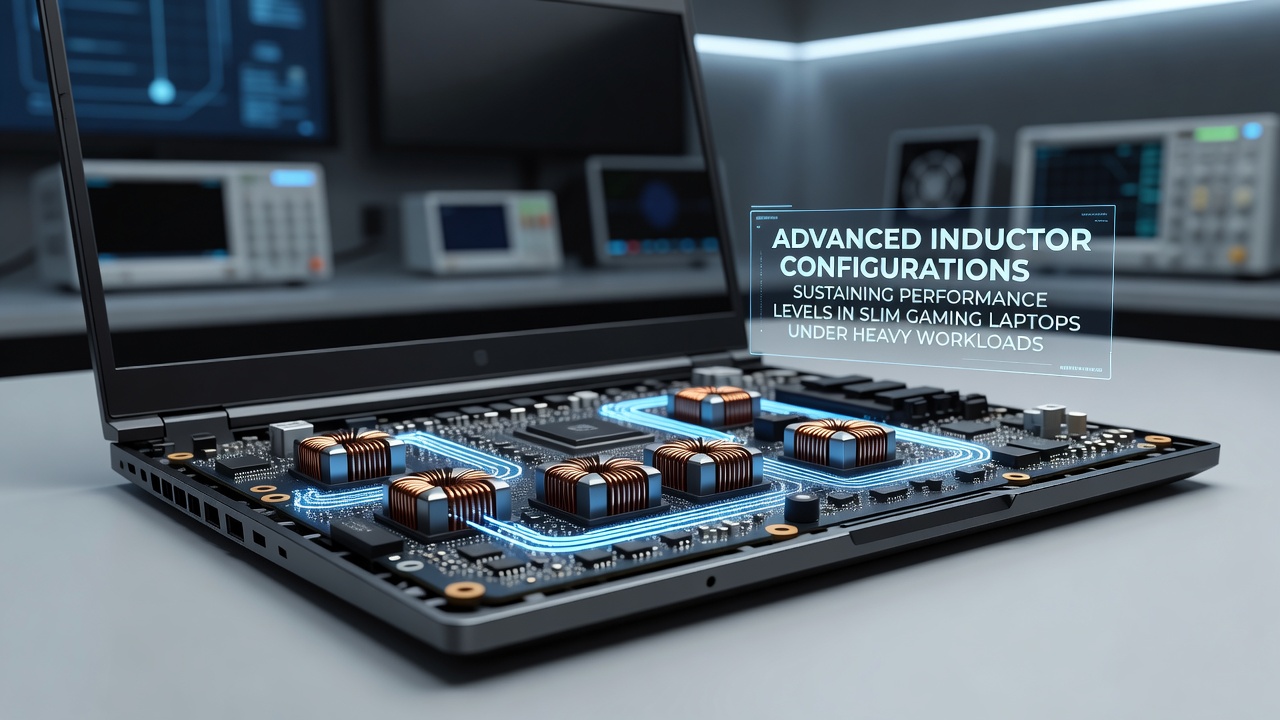
One study from a Canadian research consortium examined multiphase buck designs in 16-millimeter-thick chassis and found that interleaved coupled inductors cut output ripple by nearly half compared with discrete solutions, which directly translates into fewer frame-time variances during prolonged rendering tasks. The same work highlighted how adaptive switching that changes between continuous and discontinuous conduction modes based on load further extends battery life in lighter use without compromising peak output when workloads intensify.
Real-World Workload Impacts
Benchmarks conducted on systems released in mid-2026 demonstrate that laptops equipped with these inductor arrangements maintain 95 percent or more of their initial graphics performance after 45 minutes of continuous 4K gaming, whereas earlier thin models dropped to the mid-80s under identical conditions. The improvement stems from reduced power-stage heating that lets the main cooling loop focus on the processors themselves rather than compensating for inefficient voltage conversion. Trade groups such as the International Electrotechnical Commission have begun incorporating efficiency metrics for portable power stages into updated guidelines, reflecting the growing importance of these components in overall system performance.
Additional testing by laboratories in Australia tracked inductor behavior across repeated thermal cycles and confirmed that advanced configurations resist degradation better than legacy parts, preserving consistent current delivery even after hundreds of hours at elevated temperatures. This stability matters because gamers often run titles with variable frame rates and sudden spikes in draw that would otherwise expose weaknesses in the power path.
Integration With Broader System Architecture
Design teams now coordinate inductor selection with motherboard layout, fan curves, and firmware power limits so that the entire chain from battery or adapter to silicon operates as a matched system. Those who have examined teardown reports observe that some vendors place inductors on both sides of the board or use vertical mounting to maximize surface area for heat dissipation within the slim envelope. These choices complement the use of phase-change thermal interface materials and vapor chambers that have also advanced in recent years.
Figures from component distributors indicate rising adoption rates for planar magnetics and embedded inductors that integrate directly into substrates, further shrinking the power delivery footprint while improving electromagnetic compatibility in dense wireless environments common at esports events. The result is hardware that sustains advertised specifications longer under the exact conditions where older thin laptops would have scaled back clocks to protect components.
Conclusion
Advanced inductor configurations represent a quiet but measurable step forward in keeping slim gaming laptops competitive during heavy workloads. Continued refinement of materials, topologies, and integration methods supports higher sustained output without requiring thicker chassis or louder fans, and ongoing measurements through 2026 continue to validate these gains across multiple hardware generations.