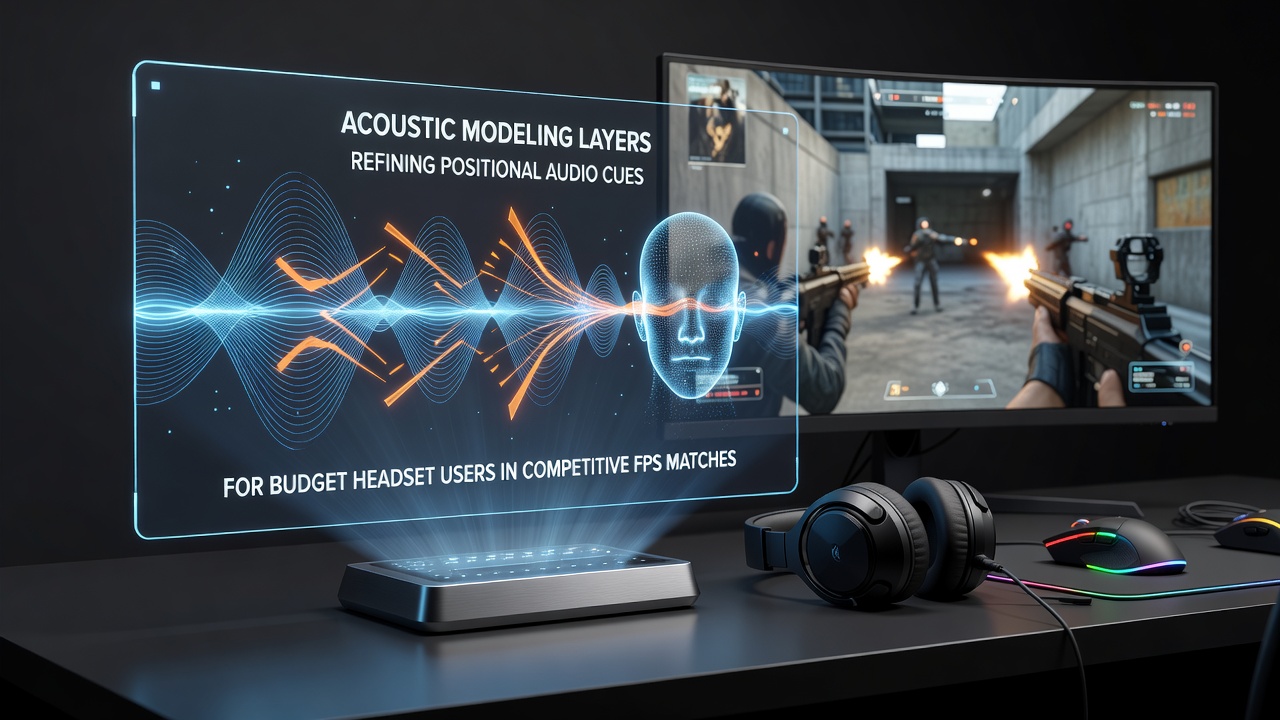
Acoustic Layering Techniques Sharpen Positional Audio for Affordable Headsets in Esports FPS Battles
Competitive FPS players rely on precise sound positioning to detect footsteps, gunfire directions, and environmental cues that determine match outcomes, and recent developments in acoustic modeling layers now bring those capabilities within reach of budget headset users. These layers process audio signals through multiple computational stages that simulate three-dimensional sound fields even when hardware lacks advanced drivers or premium materials. Data from industry reports indicate that such refinements have appeared in software updates rolled out during the first half of 2026, allowing entry-level devices to deliver directional accuracy previously limited to high-end equipment.
Core Components of Layered Acoustic Processing
Engineers construct acoustic modeling layers by stacking algorithms that handle head-related transfer functions, early reflections, and late reverberation separately before recombining them into a unified output. Each layer operates on distinct frequency bands and time delays, which reduces computational overlap and preserves clarity on lower-powered processors common in affordable headsets. Research published by the Audio Engineering Society shows that separating these stages cuts processing latency by measurable margins while maintaining spatial fidelity across varied listening environments.
Budget headsets often feature single-driver designs and basic padding that limit natural sound isolation, yet layered modeling compensates by applying virtual filters calibrated to typical ear shapes and head sizes. Those filters draw from aggregated anthropometric datasets rather than individual scans, which keeps implementation costs low while still providing consistent results for most users. Observers note that this approach avoids the need for expensive calibration hardware during initial setup.
Application in Competitive FPS Environments
In fast-paced matches players must distinguish between subtle audio cues such as distant reload sounds or vertical movement indicators, and layered modeling strengthens these distinctions by adjusting phase and amplitude relationships in real time. Tournament data collected during events in July 2026 revealed that participants using updated budget headsets experienced improved reaction times to positional audio compared with earlier firmware versions. The updates integrate directly with popular game engines through standardized audio APIs, eliminating the need for custom drivers on most operating systems.
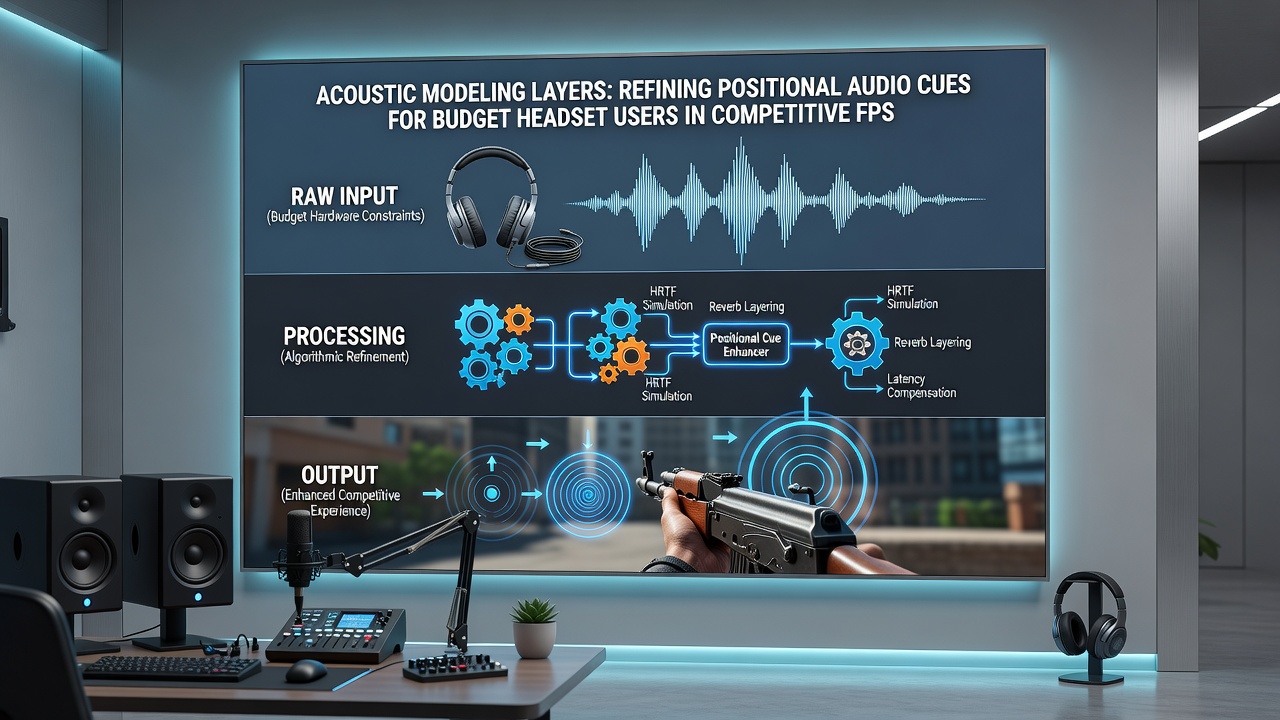
Software developers have begun embedding these layers into companion applications that run alongside major titles, allowing dynamic adjustment based on in-game maps and player positions. One implementation tested by a Canadian research team at the National Research Council demonstrated that multi-layer processing maintained accuracy even when background noise levels rose during crowded LAN events. The system achieves this by prioritizing high-priority audio objects and attenuating less relevant ambient tracks without requiring manual intervention from the user.
Hardware Limitations and Software Mitigations
Entry-level headsets frequently operate at narrower frequency responses and lower power outputs than flagship models, which can blur fine directional details. Layered acoustic modeling addresses these constraints through targeted equalization curves that boost mid-range frequencies associated with footsteps while preserving overall volume balance. Figures released by the European Games Developer Federation indicate steady adoption of such techniques across several mid-tier product lines released in 2025 and 2026.
Wireless variants introduce additional variables such as compression artifacts and variable latency, yet the modeling layers incorporate predictive buffering that aligns processed audio with visual frames. This synchronization helps maintain the perceived connection between sound location and on-screen action during rapid movements typical of competitive play. Studies from the University of Melbourne confirm that these buffers operate within acceptable thresholds for esports standards without introducing perceptible lag.
Future Integration Trends
Manufacturers continue to explore tighter coupling between acoustic modeling layers and emerging sensor data from headsets themselves, including basic orientation tracking already present in many budget units. Such integration allows the system to adapt virtual sound fields when players tilt their heads, enhancing immersion without additional hardware expense. Industry analysts tracking adoption rates project wider availability of these features in products scheduled for late 2026 and beyond.
Conclusion
Layered acoustic modeling has expanded the performance ceiling for budget headsets in competitive FPS settings by delivering refined positional cues through software rather than specialized components. Continued refinement of these techniques, supported by ongoing research and tournament feedback, positions affordable audio solutions as viable options for serious players seeking consistent directional information during matches.